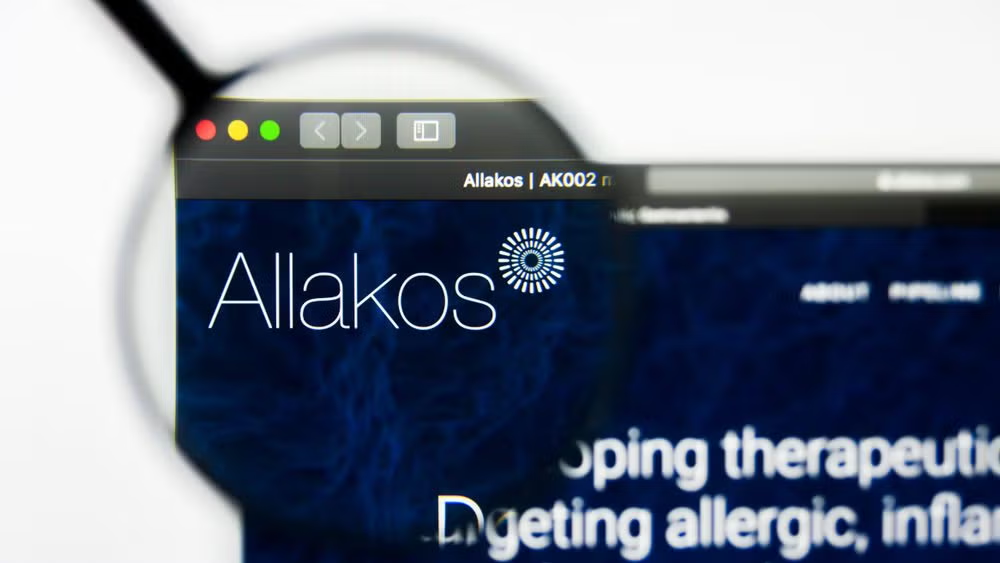
27 January 2025 – The biotech rollercoaster has delivered another dramatic downturn. Allakos Inc., a California-based immunology company once valued at over $13 billion, announced today that its lead antibody therapy AK006 failed to meet efficacy targets in a pivotal mid-stage trial for chronic spontaneous urticaria (CSU), better known as chronic hives.
Trial Outcome
The 14-week Phase II study was designed to evaluate whether AK006 could significantly reduce symptoms in patients with CSU, a condition characterized by recurrent, itchy hives and swelling that often persists despite antihistamine therapy. However, Allakos revealed that AK006 performed no better than placebo, forcing the company to immediately discontinue development.
This result came as a shock to many in the immunology research space. CSU remains an area of high unmet medical need, with patients frequently cycling through limited treatment options such as antihistamines, corticosteroids, or biologics like Novartis and Genentech’s Xolair (omalizumab). AK006 had been positioned as a potentially best-in-class option because of its novel targeting of Siglec-6, a receptor on mast cells believed to play a role in allergic and inflammatory conditions.
Impact on Workforce and Strategy
In the wake of this trial failure, Allakos announced it will cut 75% of its workforce, leaving only about 15 employees. Those remaining will handle compliance, clinical trial wind-down activities, and oversee what little remains of the pipeline.
CEO Robert Alexander described the news as “deeply disappointing,” and confirmed that the board is exploring strategic alternatives. These include potential mergers, acquisitions, licensing of intellectual property, or a complete wind-down of operations if no viable options emerge.
Financial Context
The collapse of AK006 leaves Allakos without a single clinical-stage program. Investors reacted swiftly: shares of the company, which once commanded a valuation in the billions, are now worth approximately $22 million in market capitalization—representing one of biotech’s most precipitous falls in recent years.
Since its founding, Allakos has reportedly lost over $1.2 billion, fueled by ambitious R&D spending and high expectations for AK006 and its predecessor program, lirentelimab, which also stumbled in late-stage studies for gastrointestinal diseases.
Wider Industry Implications
Allakos’ collapse underscores a recurring theme in biotech: the extreme binary risk of single-asset companies. With only one drug in active development, the margin for error is nonexistent. Clinical trial failures, while common across the industry, are devastating for companies without diversified pipelines.
For clinical researchers, the case highlights the importance of trial design and translational models. Early optimism around AK006 was based on mechanistic rationale and strong preclinical data, yet the failure suggests that the biology of CSU remains more complex than anticipated. This will likely inform how future studies approach patient selection, endpoints, and placebo response—an especially tricky variable in dermatological conditions.
Implications
The immediate priority for Allakos is managing its corporate downsizing and evaluating whether any of its assets—clinical data, manufacturing capabilities, or intellectual property—can be salvaged. Analysts speculate that larger pharmaceutical companies with existing dermatology or immunology portfolios may consider acquiring remnants of Allakos’ technology at a discount, though enthusiasm is expected to be limited after repeated clinical disappointments.
If no buyer emerges, Allakos may join the list of biotech firms that flared brightly on the promise of novel science, only to fade after a few high-profile setbacks. For patients with chronic hives, the setback is a reminder of the slow and uncertain progress of drug development, even when scientific rationale appears strong.