For the roughly one-third of epilepsy patients whose seizures are not controlled by antiseizure medications, the treatment landscape has changed remarkably little over decades. Polypharmacy regimens, dietary interventions, vagus nerve stimulation, and resective surgery are the current options — each with meaningful limitations in efficacy, tolerability, or eligibility. Neurona Therapeutics is pursuing a fundamentally different approach: restoring inhibitory signalling in the epileptic hippocampus by transplanting allogeneic GABAergic interneurons.
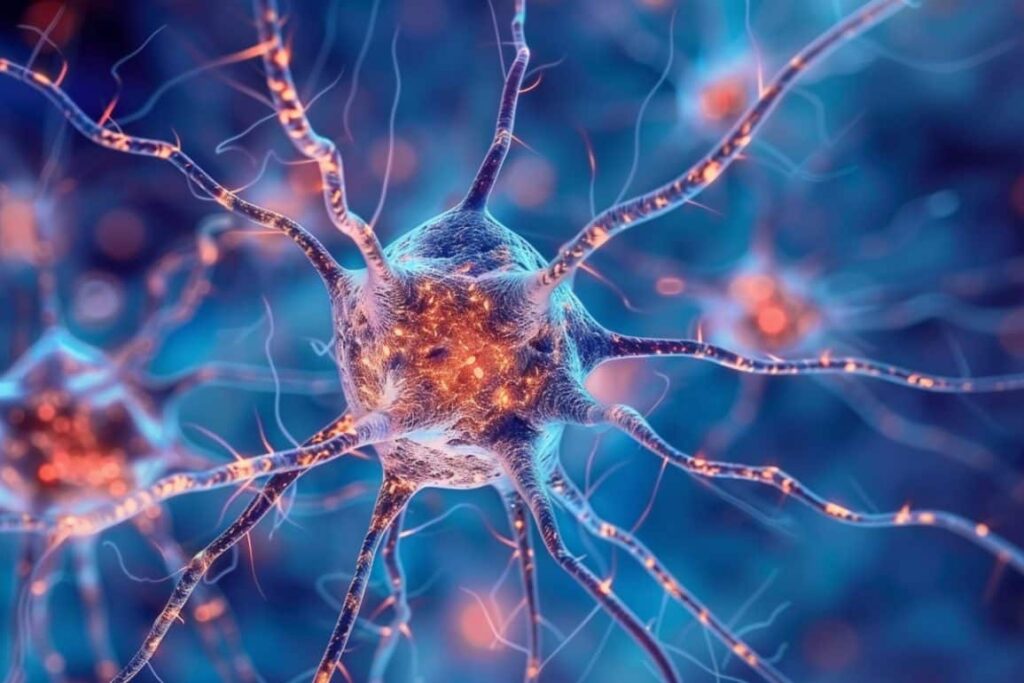
Rezanecel (NRTX-1001) is a one-time regenerative cell therapy comprising human inhibitory interneurons derived from a foetal cortical precursor cell line. The therapeutic hypothesis is direct: in mesial temporal lobe epilepsy (MTLE), the inhibitory GABAergic interneuron network is depleted, particularly in the hippocampal dentate gyrus, removing the brake on hyperexcitable glutamatergic circuits. Transplanting functional interneurons — cells that secrete gamma-aminobutyric acid (GABA) — into the affected region aims to reconstitute that inhibitory brake and reduce seizure frequency.
Updated data presented at the 2026 American Academy of Neurology Annual Meeting in Chicago reported results from 31 participants dosed across two open-label Phase 1/2 trials evaluating both low- and high-dose rezanecel in drug-resistant MTLE, with and without mesial temporal sclerosis. The dataset builds on prior presentations at the 2025 American Epilepsy Society meeting, where Neurona reported durable seizure reduction extending beyond 12 months in early participants.
The clinical programme has accumulated meaningful regulatory support. The FDA granted RMAT designation to NRTX-1001 in June 2024, a designation reserved for regenerative medicine therapies addressing serious or life-threatening conditions with preliminary clinical evidence of improved outcomes versus existing therapies. The European Medicines Agency followed in October 2025 with PRIME designation, its equivalent priority development pathway. Both designations facilitate intensive agency interaction and may shorten the time to regulatory review.
The Phase 3 EPIC (EPIlepsy Cell Therapy) trial is now planned to dose first subjects in the first half of 2026. The trial will represent the first Phase 3 evaluation of a GABAergic cell therapy for epilepsy and will be closely watched by the neurology community as a potential proof-of-concept for interneuron transplantation as a disease-modifying strategy.
The scientific rationale underlying NRTX-1001 resonates with a growing body of research implicating imbalanced glutamate-GABA dynamics in epileptogenesis. The logic of enhancing GABAergic inhibition — rather than simply blocking glutamatergic excitation — is gaining traction as a mechanistic priority in treatment-refractory seizure disorders. Companies exploring small-molecule approaches to upregulate endogenous GABA synthesis pathways, including through enzyme targets such as glutamate decarboxylase 65 (GAD65), are watching the cell therapy evidence closely as external validation of the underlying mechanism.
If EPIC delivers positive Phase 3 results, rezanecel would represent the first disease-modifying therapy for MTLE — a patient population with high unmet need and currently no curative pharmacological option.