Bright Minds Biosciences’ announcement of Phase II BREAKTHROUGH trial results for BMB-101 this January, demonstrating up to a 73 percent median reduction in seizures across adults with drug-resistant absence seizures and developmental and epileptic encephalopathies, landed as meaningful news in a field that has been waiting for it. After years of incremental progress, the epilepsy pipeline is finally showing real movement, and the diversity of mechanisms driving that movement tells you something important about where the field is headed.
The mechanisms in play right now are genuinely different. Bright Minds’ novel approach to seizure reduction. Anticonvulsivants targeting Nav1.1 expression via antisense. Serotonergic modulation. Cell therapy for focal epilepsy. Each represents a distinct pharmacological lever for pulling neuronal excitability back toward balance. Each has generated clinical signal. And each, meaningfully, addresses only a portion of the patient population that still seizes despite everything else.
That last point is the one that matters most.
Sodium channel blockers have dominated epilepsy treatment for decades. But they don’t work for everyone. A meaningful population, particularly those with developmental and epileptic encephalopathies, have seizures rooted in something sodium channel drugs don’t address directly: a deficit in the brain’s own inhibitory capacity.
“What strikes me about Bright Minds’ data is not just the efficacy signal,” said Monica Russell, Chief Scientific Officer of Mentara Bio. “It is that the field has finally accepted there is no single mechanism that solves seizures for everyone. In my years leading research programs across pharma, I have seen how technological innovation in drug discovery creates moments where the conversation shifts. This is one of those moments. Heterogeneous patient populations need heterogeneous solutions, and the companies building for overlooked mechanisms will define the next generation of epilepsy treatment.”
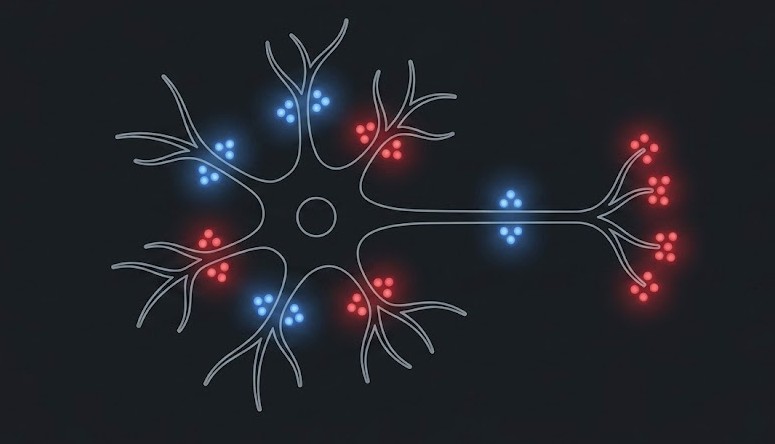
The newest generation of epilepsy mechanisms tend to work by either dampening excitatory signaling or restoring lost channel function. But they leave a gap: patients whose seizures reflect an underlying insufficiency in GABAergic inhibition rather than pure excitatory overload.
Addressing that gap requires a different strategy. Instead of working downstream on the excitatory system, you work upstream on the inhibitory one. You don’t try to ease off the gas. You make the brakes themselves stronger.
“GAD65 enhancement addresses a population that existing mechanisms do not,” Russell said. “Patients with inhibitory deficits have been overlooked precisely because no one was building for them. That is the thesis behind MN-301. The rate-limiting step in GABA synthesis is GAD65. By enhancing that enzyme, you amplify the brain’s intrinsic capacity to generate inhibition. You are not replacing a function or dampening a signal. You are strengthening a biological system that has failed to function adequately on its own.”
The clinical relevance is specific. Patients who have failed sodium channel drugs, and increasingly, patients who have failed multiple mechanism classes, often retain seizures that reflect this inhibitory deficit.
“This population exists,” Russell said. “It is substantial. And it has been largely overlooked by the field for years. MN-301 was designed specifically for those patients. Bright Minds’ data tells us we are asking the right question. We will have more to share on our own clinical progress in the coming months.”
What is striking about the current moment in epilepsy is not that Bright Minds’ mechanism works. It is that the field has matured enough to accept that seizure control is not a unified problem. The diversifying pipeline is not competition to be feared. It is confirmation that no single drug will solve epilepsy for everyone, and that solutions built for overlooked patient populations matter.